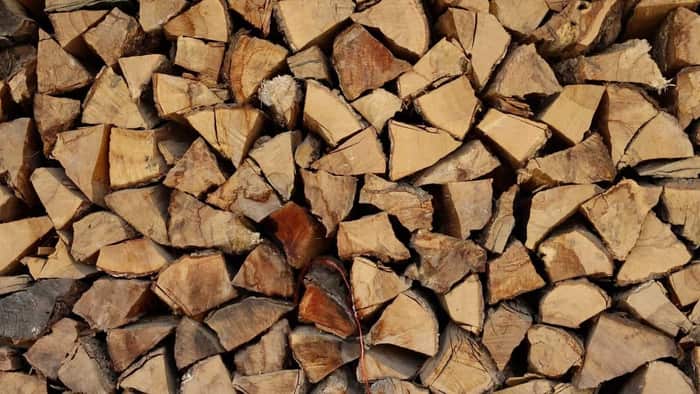
What each option actually is
Green wood is freshly cut and split, typically 45 to 60 percent moisture — cheapest per cord, but needs months to a year or more of proper seasoning (see what "seasoned" is supposed to mean) before it burns cleanly. Kiln-dried wood is artificially dried in a controlled chamber, usually down to well under 20 percent moisture, and is ready to burn immediately on delivery — no waiting, no meter check required.
The kiln process itself, not just the drying, adds real cost: energy, time in a chamber, and typically more careful handling, all reflected in a noticeably higher price per cord than green or even naturally seasoned wood.
- Green wood — 45–60 percent moisture, cheapest per cord, needs months to a year or more before it burns cleanly.
- Naturally seasoned — cut and stacked the prior year, priced between green and kiln-dried, ready if actually dried properly.
- Kiln-dried — usually under 20 percent moisture, highest price per cord, ready to burn the day it is delivered.
The math on the premium
Kiln-dried firewood commonly costs 30 to 60 percent more per cord than green wood from the same species and region. That premium buys certainty — no risk of an under-seasoned cord smoking through your first cold snap — and, for species that season slowly like oak, it can also mean paying for a full cord of usable heat right away instead of waiting a year for a green cord to catch up.
Whether that premium is worth it depends entirely on your timeline. If you're ordering in spring or summer for the following winter, seasoned or green wood at the lower price has time to dry properly. If you need heat now and have no seasoned wood on hand, kiln-dried avoids the alternative of buying green wood and getting a smoky, inefficient burn all winter.
A middle option: buying pre-seasoned, not kiln-dried
Many sellers offer wood that was cut and stacked the prior year — naturally seasoned, not kiln-dried — at a price between green and kiln-dried. It carries the same seasoning benefits as kiln-dried without the kiln premium, provided the seller actually let it season properly rather than just calling it 'seasoned' on the invoice. Confirm with a moisture-meter reading on delivery if it matters to you (see what "seasoned" is supposed to mean for how).
Frequently asked questions
Kiln-dried vs seasoned firewood: which is the better buy?
Naturally seasoned wood reaches the same roughly-20-percent moisture target as kiln-dried, for less money, provided the seller genuinely let it season for the better part of a year. Kiln-dried costs more but guarantees that moisture through a controlled process, so it is the safer bet when you cannot verify how long the "seasoned" wood actually sat.
Is kiln-dried firewood always drier than naturally seasoned wood?
Typically yes, and more consistently so — kiln drying is a controlled process, while natural seasoning depends on stacking, climate, and time, all of which vary between sellers.
Does kiln-dried wood burn differently from seasoned wood at the same moisture?
At the same moisture content, the heat output is essentially the same — the kiln process changes how quickly the wood got there, not its BTU content once dry.
Is green wood ever the right choice?
Yes — if you're buying well ahead of when you'll burn it (a year or more out) and have proper stacking space, green wood at the lowest price per cord gives it time to season on its own before you need it.